Is a Laptop Cooling Pad Necessary? A Practical Guide
Contents
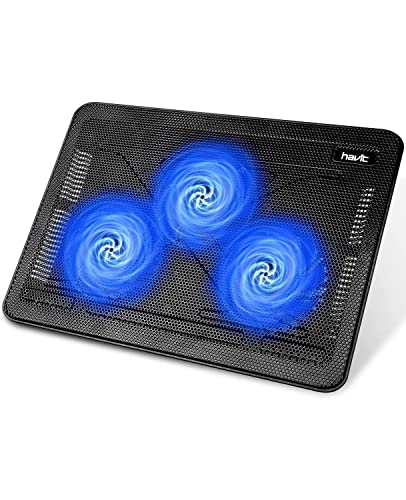
I remember the exact moment I realized my laptop had a heat problem. I was deep into a video render, the fans screaming like a jet engine, when the screen suddenly dimmed and the timeline stuttered to a halt. The machine was hot enough to fry an egg on the aluminum chassis. That wasn’t just an inconvenience; it was my workflow hitting a brick wall. I grabbed a cooling pad from my shelfa trusty havit HV-F2056 156-17 I keep for testingand slid it underneath. The change wasn’t magical, but it was immediate. The fan noise dropped from a shriek to a hum within minutes.
That experience made me question everything. Was the pad a crutch for poor laptop design, or a genuine tool for longevity? I’ve tested half a dozen pads on machines from a silent MacBook Air M2 to a roaring gaming laptop, on beds, desks, and in sunlit rooms. Let’s cut through the marketing and get real about when a cooling pad is a lifesaver, and when it’s just another gadget collecting dust.
My Experience with Laptop Overheating: A Personal Story
My primary laptop is a Dell XPS 15, a powerhouse known for cramming serious hardware into a slim frame. It’s also notorious for heat. For everyday browsing, it’s fine. But the first time I tried to edit 4K footage, I witnessed thermal throttling firsthand. The CPU, which started at a blistering 4.5 GHz, slowly sank to a sluggish 2.1 GHz as the temperature climbed. The render time doubled. The machine was protecting itself from damage, but my productivity was the casualty.
I also use a MacBook Air M2 for travel. Apple’s silicon is incredibly efficient, and it rarely gets warm. But place it on a fluffy comforter while I’m working from bed, and even it starts to heat up, the passive cooling system struggling without clean airflow. These two extremesa performance Windows laptop and an efficient Apple oneframed my entire investigation. Heat is a universal enemy, but its impact varies wildly.
The Science Behind Laptop Heat: Why It’s a Silent Killer
Laptops generate heat. It’s physics. The CPU and GPU are miniature power plants, and that energy has to go somewhere. The internal cooling systema combination of heat pipes, a heat sink, fans, and ventsworks to exhaust it. When this system is overwhelmed, bad things happen.
First, you get thermal throttling. The processor slows itself down to cool off, crippling performance right when you need it most. This is the “silent killer” for gamers and creators. Second, consistent high heat accelerates wear. Thermal paste dries out faster, components degrade, and that annoying laptop fan noise becomes a permanent whine. Over years, this absolutely shortens your laptop lifespan. The root causes are often a combination of intense workloads (like video rendering or data analysis), high ambient temperature, and poor ventilation caused by dust accumulation or soft surfaces blocking the vents.
If you’re curious about how these internal components fit together, a great resource is this deep dive into fundamental laptop components and their functions.
I Tested It: What a Cooling Pad Actually Does (And Doesn’t Do)
I set up a simple test. I ran a CPU stress test on my Dell XPS 15 for 30 minutes on a wooden desk, then repeated it with the Havit cooling pad on maximum speed. I monitored the CPU temperature and clock speeds.
Heres what a good cooling pad actually accomplishes:
- Improves Baseline Airflow: It elevates the laptop, ensuring the intake vents (usually on the bottom) aren’t choked. This is its single biggest benefit.
- Lowers Sustained Temperatures: In my test, peak temps dropped by 7-10C. Not earth-shattering, but meaningful.
- Reduces Fan Speed & Noise: Because the system is cooler, the internal fans don’t need to spin as fast or as long. The noise reduction was noticeable.
- Can Mitigate Throttling: The CPU maintained its higher boost clock for longer periods, shaving minutes off my render test.
And heres what it absolutely does NOT do:
- Fix a Broken Cooling System: If your laptop’s internal fans are dead or the heat pipes are clogged with dust, a pad is a band-aid on a broken leg. You need to clean or repair the internal system first. Understanding how laptop cooling systems work internally is key here.
- Make a Cool Laptop Cold: If your machine runs fine on a desk (like an M2 MacBook Air), a cooling pad won’t deliver a “performance boost.” There’s nothing to boost.
- Replace Good Habits: Using a laptop on a bed or pillow will still cause overheating, pad or no pad. The pad helps, but it can’t defeat a suffocating blanket.
So, do cooling pads actually lower laptop temperature? Yes, but with major caveats. The laptop temperature reduction is real, but it’s supplemental, not primary.
Who Really Needs One? A Direct Comparison of User Scenarios
This is the core of the issue. The necessity of a cooling pad isn’t universal; it’s situational. Let’s break it down with a direct comparison.
| User & Laptop Type | Typical Workload | Cooling Pad Verdict | Reasoning |
|---|---|---|---|
| Gamer with a High-TDP Laptop (e.g., ASUS ROG, MSI Raider) | AAA Gaming, VR | Almost Essential | These machines push thermal limits. A pad helps sustain GPU/CPU boost clocks, preventing FPS drops from throttling. This is where gaming laptop cooling is a real concern. |
| Content Creator (e.g., Dell XPS 15, MacBook Pro 16″) | 4K Video Editing, 3D Rendering | Highly Recommended | Long, sustained CPU/GPU loads generate immense heat. A pad protects your investment and can significantly cut export times. |
| Student / Casual User (e.g., Lenovo IdeaPad, MacBook Air) | Web, Docs, Streaming | Optional (Context-Dependent) | For desk use, probably not needed. But if you often use your laptop on your lap, couch, or bed, a stand or pad is smart to prevent blocked vents. The choice between a Lenovo ThinkPad vs IdeaPad, for instance, matters herebusiness laptops often have more robust cooling. |
| Data Analyst / Software Developer | Compiling Code, Running Simulations | Recommended | Like rendering, these are bursty but intense workloads that heat up the CPU quickly. A pad provides thermal headroom. |
Ask yourself: when is a laptop cooling pad necessary for me? If you see yourself in the first two categories, start shopping. For the latter, consider your environment first.
Beyond the Pad: Other Ways I Keep My Laptop Cool
A cooling pad is one tool in the toolbox. Heres my personal hierarchy of cooling tactics, from most to least effective:
- Clean the Vents! Every 6 months, I use a can of compressed air to blast dust from the exhaust vents. This is the highest-return maintenance you can do.
- Use a Hard, Flat Surface: Simply propping up the laptop’s rear with a book for better airflow can drop temps by a few degrees. This leads to the common debate: cooling pad vs laptop stand for airflow. A stand is often enough for non-gaming use.
- Repaste the CPU/GPU: For older laptops (2+ years), the factory thermal paste can dry out. Replacing it requires skill but can dramatically improve heat transfer. This is a more advanced fix.
- Manage Your Environment: Don’t use your laptop in direct sunlight. Lower the room temperature if you can. High ambient temperature is an uphill battle for any cooler.
- Adjust Power Settings: In Windows, using “Better Performance” instead of “Best Performance” can reduce heat generation for non-critical tasks.
My Final, Honest Verdict: Is It Necessary for You?
So, is a cooling pad worth it for gaming and heavy creative work? In my experience, absolutely. It’s an insurance policy for performance and longevity. For a high-end gaming laptop or mobile workstation, I consider it a necessary accessory.
For everyone elsestudents, office workers, casual usersthe answer is murkier. Is a laptop cooling pad necessary for browsing and Netflix? Not really. But if your usage habits involve soft surfaces, or if your specific laptop model runs hot (a quick search for “[Your Laptop Model] overheating” will tell you), then a simple, inexpensive pad or stand is a brilliant quality-of-life upgrade. It reduces noise and gives you peace of mind.
My take? Don’t buy a cooling pad because you think you should. Buy it because you’ve identified a specific thermal problem it can solve. For intense workloads and poorly ventilated environments, it’s a smart, effective tool. For light use on a clean desk, save your money. Understand your laptop, your habits, and your needs. That’s the real key to keeping your cool.