Best NAS Drive for Home Media Streaming: What to Look For (and One Solid Option)
Contents
You finally got that 4K OLED TV. You bought the soundbar. You subscribed to three streaming services. But your local media collection—movies, home videos, music—is scattered across three external drives and an old laptop. Finding a specific file takes ten minutes. And forget streaming a 4K rip over Wi-Fi without buffering. That’s where a NAS drive changes everything.
In this article, I’ll walk you through the specific specs and trade-offs that matter for best NAS drive for home media streaming. By the end, you’ll know exactly what to look for and whether a simple single-bay unit fits your needs or if you need something bigger.
BUFFALO
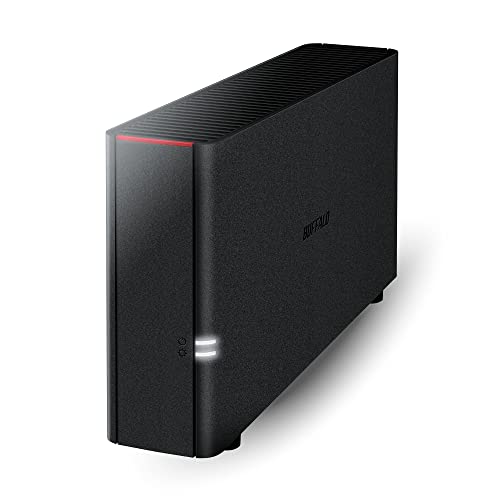
BUFFALO LinkStation 210 2TB 1-Bay NAS Network…
- Value NAS with RAID for centralized storage and backup for all your devices. Check out the LS 700 for enhanced features, cloud cap…
- Connect the LinkStation to your router and enjoy shared network storage for your devices. The NAS is compatible with Windows and m…
- Subscription-Free Personal Cloud – Store, back up, and manage all your videos, music, and photos and access them anytime without p…
One option that checks many boxes for a straightforward setup is the BUFFALO LinkStation 210 2TB. It’s a 1-bay NAS that comes with a hard drive already inside, so you don’t need to buy separate parts. It works as a personal cloud—no monthly fees—and supports automated backups for Windows and macOS.
CPU and RAM: How Much Horsepower Do You Need for Streaming?
Not all NAS drives process video the same way. If you plan to stream directly from the drive without converting formats (aka direct play), even a low-power chip works fine. But if you need transcoding—converting a 4K file down to 1080p for an older TV or a phone—you need a CPU with hardware transcoding support. Intel Celeron or newer ARM chips with dedicated video encoding blocks do this well.
The Buffalo LinkStation 210 uses a closed system designed for file sharing and backup, not heavy transcoding. For most home users who just want to watch files in their original format on compatible players, that’s perfectly fine. Don’t overspend on a powerful NAS if you never transcode. A media streaming laptop connected to your TV might handle direct play just as well, but a NAS keeps the library always accessible.
Drive Bays and RAID: One Bay vs. Two vs. More
A single-bay NAS like the LinkStation 210 gives you exactly one drive’s worth of storage. No redundancy. If that drive fails, your data is gone unless you have a separate backup. RAID 1 (mirroring) in a 2-bay unit protects against a single drive failure but cuts usable capacity in half. For media libraries that are mostly re-downloadable, some people skip RAID and just back up irreplaceable files (family photos) to a separate external drive. That’s a valid cost-saving move.
This article is part of our bigger Best Mini PC Comparisons (2026) hub.
Multi-bay NAS (4+ bays) lets you add storage over time, but you pay more upfront. My advice: if you have under 4TB of media and back up critical data elsewhere, a 1-bay is enough. If you have more than that or want fault tolerance, get at least 2 bays.
Software Makes or Breaks the Experience
The best hardware in the world is useless if the software is clunky. The Buffalo LinkStation 210 comes with NAS Navigator for setup and management. It’s basic but reliable. For media streaming specifically, you’ll want to know if the NAS supports Plex Media Server, Emby, or Jellyfin. Many higher-end NAS options support these as apps. The LinkStation 210’s closed system limits third-party apps, so you’re mostly using SMB/CIFS file sharing to stream to a media player like VLC, Kodi, or an Apple TV app.
That works fine if you have a client device that can read the file formats directly. For Plex lovers, look at the LS700 series or a different brand. Think about what software ecosystem you prefer before buying. A great desktop computer for home can also run a media server, but a dedicated NAS uses less power and sits quietly in a corner.
| Configuration | Price Range | Max Storage | Transcoding | Ease of Setup | Best For |
|---|---|---|---|---|---|
| Single-bay pre-built (e.g., Buffalo LS210) | Check current price on Amazon | Up to 4TB (internal limit) | No (direct play only) | Very easy | Small media libraries, backup, non-Plex users |
| Multi-bay pre-built (2-4 bays, e.g., Synology DS220+) | Higher | Up to 40TB (with large drives) | Yes (with compatible CPU) | Moderate | Larger libraries, Plex/Emby, redundancy |
| DIY NAS (old PC + FreeNAS/Unraid) | Variable | Varies by hardware | Depends on GPU | Advanced | Tech enthusiasts, max customization |
For more options, check out expert reviews of NAS devices that cover a wide range of budgets and features.
Network and Connectivity: Wired vs. Wireless
Your NAS is only as fast as your network. For smooth 4K streaming, wired Ethernet (Gigabit) is the baseline. The Buffalo LinkStation 210 has a Gigabit port. Connect it directly to your router, not a switch that might be slow. Avoid relying on Wi-Fi for the NAS connection—streaming large files over Wi-Fi causes buffer bloat and stutters.
Your streaming device (TV, laptop) can be wireless, but the NAS-to-router link should be wired. If you have a newer router with Wi-Fi 6, a wired NAS still outperforms any wireless connection for sustained transfers. Don’t waste money on a 2.5GbE NAS unless your whole network supports it.
Frequently Asked Questions
Can I stream 4K movies from a 1-bay NAS?
Yes, if your network is wired and your media player supports the file format natively. The Buffalo LS210 can serve a 4K HDR file over SMB fast enough for direct play. You won’t get transcoding, so if you need to downscale to 1080p, you need a NAS with a stronger CPU or a client that handles conversion.
Do I need a NAS if I already have an external hard drive connected to my router?
Some routers have USB ports that let you plug in a drive and share it. That’s a budget solution. But router USB ports are slow, lack backup software, and the drive isn’t always spinning. A dedicated NAS like the LinkStation offers better performance, automated backups, and a file system that handles corruption better. For media streaming, a real NAS is worth the upgrade.
How much storage do I need for a home media server?
A typical 4K movie with HDR is 50-80GB. A 1080p movie is around 10-20GB. Music collections vary. Start with 2TB (about 25-40 movies in 4K). 4TB is comfortable for most families. Plan for growth—buy a NAS that supports larger drives later.
Can I access my media files from outside my home?
Yes, if the NAS supports remote access. The Buffalo LS210 offers a personal cloud without subscription fees. You connect via a web portal or mobile app. Keep in mind that remote streaming over the internet requires good upload speed from your home. For casual access to a few files, it works. For streaming movies remotely, you’ll want a faster connection.
Is it hard to set up a NAS for a non-technical person?
A pre-built NAS like the LinkStation 210 is very straightforward. Plug it into your router with an Ethernet cable, power it on, install the desktop utility, and the drive appears as a network location. The included backup software walks you through setting up scheduled backups. Most people can do it in under 30 minutes. Advanced features like user permissions take a bit more time.
What to Do Next
- Figure out your media library size. List the total gigabytes of movies, shows, music, and photos you own. Add 20% for growth.
- Decide if you need transcoding. If all your devices support the same formats (e.g., all Apple TV 4K), skip it. If you stream to phones or older TVs, look for a NAS with an Intel Celeron or better.
- Check your router. Make sure it has a free Gigabit Ethernet port and that your streaming device is wired if possible.
- Consider backup strategy. Even with RAID, back up irreplaceable files to a separate external drive or cloud service. The Buffalo LS210’s backup software helps here.
- Choose wired over wireless. A single Ethernet cable from NAS to router will save you hours of frustration.
- Set a realistic budget. A single-bay NAS plus a 2TB drive can be under $200. A 2-bay with drives will run $300-$500. Don’t overspend if you don’t need transcoding.
- Check current prices on Amazon for the Buffalo LinkStation 210 or similar models before buying.