
You are looking at a sleek, thin laptop but wondering if it is just a marketing term or an actual class of hardware. This page breaks down exactly what defines an ultrabook, how it differs from a standard laptop, and whether it fits your daily workflow.
In short: An ultrabook is a specific type of thin and light laptop designed for battery life, fast boot times, and portability. It uses low-power processors and solid-state storage to keep the chassis slim without a fan or with a quiet fan. It trades raw power for efficiency and quiet operation.
Our pick
Tap to see today's price on Amazon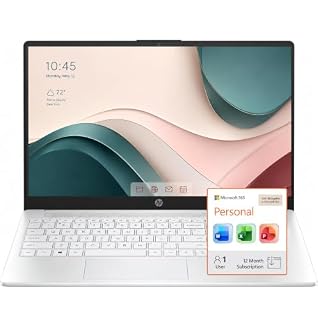
A 3.64 lb Intel-based ultrabook that handles everyday tasks and documents easily.
The Simple Definition: Thin, Light, and Fanless
Intel introduced the term in 2011 to define a category of laptops with strict size and weight limits. The goal was to make laptops that vanish in a bag and last all day on battery. Ultrabooks are not just slim marketing labels; they follow a physical design template. Loaders in this spot often ask about laptop versus desktop graphics card as well.
- Thickness: Under 0.7 inches for 13-inch models.
- Weight: Under 3 lbs for 13-inch models.
- Storage: Solid-state drives (SSD) as standard.
Pro tip: Always check the exact dimensions and weight on the spec sheet before buying. Many brands use 'thin and light' for standard laptops that do not meet ultrabook limits.
This HP model shows the typical 3.64 lb weight and SSD focus that defines the category.
- Massive Storage in Hand: lightning-fast boot times and app loading. Let users Keep
- Built for Mobility: At 3.64 lbs, true portability lets user easily carry between
How the Design Balances Power and Portability
Because the chassis is thin, there is no room for a large battery or a powerful, hot CPU. Manufacturers use low-voltage processors and small, efficient SSDs. This means the laptop stays cool and silent, but it will throttle under heavy sustained loads.
Modern ultrabooks use Intel Core U-series or AMD Ryzen U-series chips. These are the low-power versions designed for portability, not the H-series chips found in gaming rigs. They handle web browsing, video calls, and office apps smoothly without fans spinning up.
The lack of space also means fewer ports. You will often find only two or three USB-C ports on the side. Many models require a dongle to connect traditional USB-A devices or HDMI monitors. This is the trade-off for the slim profile.
Safety first: If you plan to run video editing or 3D rendering, an ultrabook will overheat and slow down. Do not force heavy workloads on a fanless or single-fan design.
When You Actually Need an Ultrabook
Ultrabooks shine in specific mobility scenarios. If you move between desks, classrooms, or airports daily, the weight savings matter more than specs. There is more on budget vs high end gpu in a separate guide.
- The commuter: Carries the laptop in a slim messenger bag, not a heavy backpack.
- The student: Moves between lecture halls and libraries without needing a power outlet.
- The professional: Uses the device for email, presentations, and client calls on the go.
If your work is primarily typing, reading, and video conferencing, the ultrabook is the ideal tool. The silence of a fanless design makes it perfect for shared office spaces or quiet libraries where a loud fan would be distracting.
Pro tip: If your primary desk is at home and you rarely carry the machine, a standard desktop or thicker laptop with better cooling and upgradeability is a better buy.
Common Myths About Ultrabook Performance
Myth: It cannot handle video calls. Fact: Modern low-power CPUs handle Zoom and Teams calls easily as long as your internet is stable.
Myth: They are fragile. Fact: Most use aluminum or magnesium alloys that resist denting, though the thin profile means they are not meant for drops.
Myth: They last forever on battery. Fact: 8 to 10 hours is the standard for light work. Heavy video playback or brightness above 50% will drop that to 5 or 6 hours.
Myth: They cannot be repaired. Fact: While RAM and storage are often soldered, the battery and screen are usually replaceable. However, they are more difficult to open than standard laptops. It helps to understand identifying key features of thin and light laptops before going further.
How to Choose the Right One for Your Budget
Ultrabooks start in the budget tier with low-end chips and basic screens. You will find premium models with OLED displays and 32GB of RAM at a higher price point. The key is matching the tier to your actual usage.
- Budget: 8GB RAM, 256GB SSD. Good for school and web.
- Mid-range: 16GB RAM, 512GB SSD. Good for light creative work.
- Premium: 32GB RAM, 1TB SSD, OLED screen. Good for professionals needing color accuracy.
Do not overspend on a premium screen if you only need it for spreadsheets. The battery life is nearly the same across tiers, but the display quality and processor speed increase significantly. Storage is the first thing you should look at. 256GB fills up fast with large files. A 512GB SSD is the sweet spot for most users.
Bottom Line: The Next Step for You
If your life revolves around movement and battery life, an ultrabook is the right tool. If you stay plugged in and need heavy performance, look at a standard laptop or desktop instead. Start by identifying your heaviest daily task and buying a machine that can handle it without throttling.
Check the weight limit you are comfortable with. If you carry it every day, aim for under 3 lbs. If it stays in a bag for short trips, 4 lbs is acceptable. Verify the port selection. If you use USB-A accessories heavily, ensure the laptop includes them or buy a high-quality USB-C hub.
The bottom line
An ultrabook is the best choice if you need a machine that lasts all day, weighs under 4 lbs, and stays quiet. If you do heavy creative work or gaming, skip the ultrabook and buy a thicker, fan-cooled laptop instead. Check your weight and thickness limits before buying.
- Massive Storage in Hand: lightning-fast boot times and app loading. Let users Keep
- Built for Mobility: At 3.64 lbs, true portability lets user easily carry between
Frequently asked questions
Is an ultrabook the same as a MacBook Air?
They are the same form factor. The term ‘ultrabook’ is a generic category, while ‘MacBook Air’ is a specific product from Apple. Many MacBook Airs meet the ultrabook definition of being thin, light, and fanless or quiet. The other half of this decision is laptop thickness choice.
Can an ultrabook handle video editing?
Only light, 1080p social media edits. The low-power chip and thin chassis cause thermal throttling under sustained heavy workloads. For 4K editing or 3D rendering, you need a thicker laptop with a dedicated GPU and larger fans.
What is the minimum battery life for an ultrabook?
Most manufacturers claim 8 to 10 hours for light web browsing. In real-world use with video streaming and brightness on, expect 5 to 6 hours. Check recent user reviews for actual battery performance on the specific model you are buying.
Are ultrabooks worth it for gaming?
No. They have integrated graphics that are not designed for high-framerate gaming. You can play older or very light indie games, but you will need to lower settings and accept poor frame rates. A dedicated gaming laptop is required for AAA titles.