
You are staring at two cards that are close in price but very different in features, and you need to know if the jump is worth the cost. This page gives you the exact specs, the trade-offs, and the buying rule for your specific situation.
In short: The RTX 4060 is the winner for most new buyers because of DLSS 3, lower power draw, and cooler operation. The RTX 3060 wins if you need 12GB of VRAM for creative work or if you find it at a steep discount. Buy the 4060 for gaming, buy the 3060 for memory-hungry productivity.
Quick picks
Our shortlist for this job · tap one to see today's price
Delivers DLSS 3 and efficient cooling, making it the right choice for a new 1080p or 1440p rig.
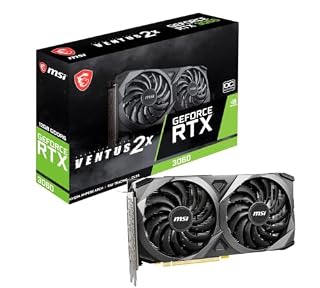
Offers 12GB of VRAM, which helps with heavy modding or creative tasks where 8GB might bottleneck.
The differences at a glance
The RTX 4060 uses the newer Ada Lovelace architecture, while the RTX 3060 uses Ampere. This difference changes everything from power consumption to the features your GPU supports. We cover amd radeon tm graphics is better than rtx in a guide of its own.
| Feature | RTX 3060 | RTX 4060 |
|---|---|---|
| Architecture | Ampere | Ada Lovelace |
| VRAM | 12GB GDDR6 | 8GB GDDR6 |
| DLSS | DLSS 2 | DLSS 3 (with Frame Gen) |
| Ray Tracing | 2nd Gen RT Cores | 3rd Gen RT Cores |
| Power Draw | Higher | Lower |
If you look only at raw rasterization, the 4060 is about 15-20% faster at 1080p. However, the 3060 has more video memory, which matters in specific scenarios. The 3060 has a wider memory bus (192-bit vs 128-bit), which helps with data throughput in some applications, even if the 4060 has faster memory speeds.
Always check the specific model. Not all 4060s are created equal; some are single-fan and louder, while others are dual-fan and cooler. The same applies to the 3060. A well-cooled 3060 can outperform a hot-throttling 4060 in a cramped case.
Gaming performance at 1080p and 1440p
At 1080p, the RTX 4060 consistently outperforms the RTX 3060. You will see smoother frame rates and higher 1% lows in titles like Forza Horizon 5 and Cyberpunk 2077. The 4060 usually hits the 1080p high-refresh sweet spot more easily, keeping the experience fluid even in busy scenes.
The gap narrows at 1440p. Here, the 8GB VRAM on the 4060 can become a limitation if you use ultra-high texture packs or heavy mods. The 3060’s 12GB buffer provides more headroom in these specific cases.
If you plan to play heavily modded games like Skyrim or Elder Scrolls Online at max textures, the 3060 is less likely to stutter due to memory constraints.
- 1080p High FPS: RTX 4060 wins. It sustains higher averages.
- 1440p Ultra Textures: RTX 3060 is safer due to 12GB VRAM.
- 1% Lows: RTX 4060 generally provides smoother performance spikes.
If you are coming from a GTX 1060 or older, both cards are a massive upgrade. The decision should not be about whether you will enjoy modern gaming, but whether you want the feature set of the 4060 or the memory of the 3060. Before you buy anything, it is worth looking at 3060 vs 4060 comparison.
This card targets the 1080p/1440p gaming market where the 4060's rasterization speed is most useful.
- Powered by NVIDIA DLSS 3, ultra-efficient Ada Lovelace architechture, and full ray
- 4th Generation Tensor Cores: Up to 4x performance with DLSS 3
DLSS 3 and ray tracing advantages
DLSS 3 Frame Generation is the RTX 4060’s biggest tool. It generates new frames using AI, which can nearly double your frame rates in supported games. The RTX 3060 only supports DLSS 2, which upscaling but does not generate frames. This means the 4060 can maintain high frame rates even when ray tracing is on.
Ray tracing runs more efficiently on the 4060 because of its third-generation RT cores. When you combine ray tracing with DLSS 3, the 4060 offers a much smoother experience than the 3060. The 3060 can handle light ray tracing, but you will likely need to turn features down or use lower quality DLSS 2 settings to keep the game playable.
If you play newer titles that support Frame Generation, the 4060 is the only card here that can use that feature. This is a future-proofing benefit. As more games adopt DLSS 3, your 4060 will remain relevant in ways the 3060 will not.
- DLSS 3: RTX 4060 only. Significant FPS boost in supported titles.
- Ray Tracing: RTX 4060 handles it with less performance loss.
- AV1 Encoding: RTX 4060 supports AV1, useful for streaming or recording.
Pro tip: Check the game's settings menu for 'DLSS 3 Frame Generation.' If it is greyed out on your card, you likely have a 3060.
Power, heat, and noise levels
The RTX 4060 is significantly more efficient. It typically uses 30 to 40 watts less power than the RTX 3060 for similar performance levels. This means it runs cooler and quieter. For system builders, this efficiency allows you to use a smaller power supply unit, saving space and energy costs.
In a desktop case, the 4060 often stays under 65°C with a standard cooler. The 3060 tends to run about 10°C warmer. In a laptop, this efficiency difference leads to better sustained performance and less fan noise. A laptop with a 4060 can often push higher wattages without hitting thermal limits as quickly. Loaders in this spot often ask about choosing between mid-range discrete gpus as well.
If you care about a quiet home office or want to maximize battery life on a laptop, the 4060 is the clear choice. The lower power draw means less heat dissipation, which is crucial in compact chassis where airflow is limited. Quieter fans also mean a better experience during long creative sessions or gaming marathons.
- Thermals: RTX 4060 runs cooler.
- Noise: RTX 4060 fans spin slower.
- PSU Size: RTX 4060 requires less power supply capacity.

High-conductivity thermal paste ensures your 4060 or 3060 stays cool if you are repasting a used card.
- With an exceptional thermal conductivity, Kryonaut is perfect for even the most
- Featuring a specially designed syringe and spatula for spreading, Kryonaut guarantees
Creativity and productivity tasks
For video editing and Blender rendering, the RTX 4060 is faster. It supports AV1 encoding, which makes exports quicker and more efficient. Its newer architecture handles GPU-accelerated tasks with better performance per watt. If you use apps that leverage the latest CUDA cores, the 4060 will generally finish jobs faster.
However, memory-hungry tasks like large photo edits or complex 3D simulations can hit the 4060’s 8GB VRAM limit. If your workflow requires more than 8GB of video memory, the 3060’s 12GB is the safer option.
In large 3D scenes with high-resolution textures, the 3060 can hold more data on the card, preventing stutter and slow-downs that occur when the system swaps data to system RAM.
Know your software requirements before you buy. Check the maximum texture sizes or viewport complexity in your creative apps. If you are working with 4K footage or massive 3D assets, the extra 4GB of VRAM on the 3060 is a tangible advantage that outweighs the speed of the 4060.
- Video Export: RTX 4060 wins with AV1 support.
- Large 3D Scenes: RTX 3060 wins with 12GB VRAM.
- GPU Rendering Speed: RTX 4060 is generally faster in newer apps.
Which should you buy?
Use this list to decide which card fits your specific build and budget. We go through rtx vs gtx graphics cards step by step in its own article.
- Building a new 1080p rig: Buy the RTX 4060 for efficiency and DLSS 3.
- Buying a gaming laptop: Choose the RTX 4060 for better thermal management.
- On a strict budget: Buy a used RTX 3060 if you can get a large discount.
- Upgrading from a 3060: Wait for a 4070; the 4060 jump is not large enough.
- Need 12GB VRAM: Buy the RTX 3060 for creative or mod-heavy workloads.
For most gamers, the RTX 4060 is the smarter, cooler, and more forward-looking card. It handles modern gaming features and runs more efficiently.
The RTX 3060 remains a strong value pick if you can find it cheap or if you specifically need the extra memory for your workflow. Always check the exact model’s cooler design before purchasing, as this impacts performance more than minor spec differences.
The bottom line
Most readers should buy the RTX 4060 for gaming and general use. It offers better efficiency, DLSS 3, and ray tracing performance. Only choose the RTX 3060 if you find a huge discount or need 12GB of VRAM for specific creative tasks.
- Powered by NVIDIA DLSS 3, ultra-efficient Ada Lovelace architechture, and full ray
- 4th Generation Tensor Cores: Up to 4x performance with DLSS 3
Frequently asked questions
Is the RTX 4060 better than the RTX 3060?
Yes, for gaming. The RTX 4060 is faster, more efficient, and supports DLSS 3. The only reason to stick with the 3060 is if you need 12GB of VRAM for creative work or are buying a heavily discounted used card.
Can I use the RTX 4060 at 1440p?
Yes, it handles 1440p well at high settings. However, with very heavy textures or ray tracing, you may need to use DLSS 3 to keep frame rates smooth because it only has 8GB of VRAM.
Which card runs cooler, the 3060 or 4060?
The RTX 4060 runs significantly cooler. It uses a more efficient Ada Lovelace architecture that draws less power for the same performance, resulting in lower temperatures and quieter fans. We go through best rtx upgrade step by step in its own article.
Is the RTX 3060 still worth buying in 2024?
It is worth buying if you find it at a steep discount. It is still a capable 1080p card and the 12GB of VRAM is a plus for productivity. But for new builds, the 4060 is the better long-term investment.