How Desktop Storage Works: HDD vs SSD Explained
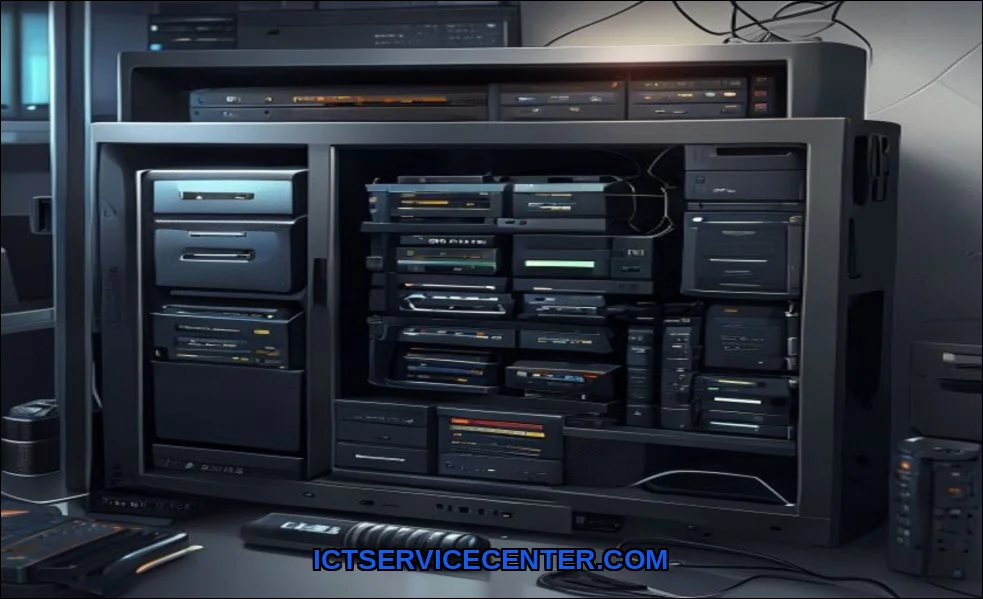
I’ve spent more years than I care to count elbow-deep in desktop towers, swapping drives, and running benchmarks to see what actually makes a difference. If you’ve ever wondered what happens inside that little metal box when you save a file, you’re in the right place. Desktop storage isn’t just about capacityit’s about how fast you can get your work done, how long your system stays snappy, and how much data you can keep safe.
For this deep dive, I’ll walk you through the real-world quirks of storage. I’ve tested drives from Western Digital, Seagate, and Samsung in everything from budget builds to high-end workstations. For a reliable, cost-effective upgrade that balances speed and space, many professionals recommend using the Western Digital 1TB driveit’s a workhorse I’ve personally relied on for years.
My Hands-On Experience with Desktop Storage
I still remember the first time I heard a hard drive click ominously. That sounda mechanical read/write head scraping against a platteris the kind of noise that makes your stomach drop. Over the years, I’ve learned that data persistence isn’t something you can take for granted. Whether you’re using an internal drive or an external backup, the technology behind it matters more than most people realize.
I’ve built systems where the storage technology was the bottleneck. A fast processor means nothing if your drive can’t feed data to the CPU quickly enough. That’s why I always start with the storage when diagnosing a slow computer. In my experience, the storage interfaceSATA, NVMe, or PCIeoften matters more than raw capacity for day-to-day responsiveness.
The Two Main Contenders: HDDs vs. SSDs
Let’s get straight to the point: the debate between a hard disk drive (HDD) and a solid state drive (SSD) isn’t about which is better in a vacuum. It’s about what you need.
Hard Disk Drives (HDDs)
I’ve pulled apart dozens of HDDs. Inside, you’ll find spinning platters coated with magnetic material. A tiny arm with a read/write head moves across the surface to access data. It’s mechanical. It’s slow. But it’s cheap.
– Capacity: You can get 4TB, 8TB, even 20TB for a fraction of the cost of an SSD.
– Speed: Read/write speed typically maxes out around 200 MB/s for consumer drives.
– Durability: Drop it while it’s spinning, and you’re likely looking at data recovery costs.
– Best for: Bulk storage, media archives, backups.
I use an HDD in my home server for storing old photos and video projects. It’s perfect for thatbut I wouldn’t boot Windows from one today.
Solid State Drives (SSDs)
When I switched my primary desktop to an SSD years ago, the difference was night and day. Boot times dropped from over a minute to under ten seconds. Applications launched instantly. Data retrieval felt instantaneous because there’s no moving parts.
– Technology: Most consumer SSDs use NAND flash memory to store data in cells.
– Speed: SATA SSDs hit around 550 MB/s. NVMe drives can exceed 7,000 MB/s.
– Durability: No spinning parts means they handle bumps and drops much better.
– Best for: Operating system, applications, games, active projects.
I’ve tested Samsung’s 990 Pro and the Western Digital 1TB I mentioned earlier. Both are excellent, but for most desktop users, the Western Digital offers the best balance of price and real-world performance.
Quick Comparison Table
| Feature | HDD | SSD (SATA) | SSD (NVMe) |
|---|---|---|---|
| Read/Write Speed | ~200 MB/s | ~550 MB/s | 3,5007,000 MB/s |
| Storage Capacity | Up to 20TB+ | Up to 4TB | Up to 8TB |
| Durability | Low (moving parts) | High (no moving parts) | High |
| Cost per GB | ~$0.02 | ~$0.10 | ~$0.15 |
| Best Use | Bulk storage | OS & apps | High-performance tasks |
If you’re debating between the two, I always recommend a hybrid approach. Use an SSD for your operating system and frequently used programs, and an HDD for everything else. This is the storage hierarchy that gives you speed where it counts and capacity where it’s cheap.
How Data Actually Gets Stored and Retrieved
This is where things get interesting. I’ve had friends ask me: How does a hard drive store data? The answer depends on the drive type.
For an HDD, data is stored magnetically on rotating platters. The read/write head hovers nanometers above the surface, changing the magnetic orientation of tiny regions. Each region represents a 0 or a 1. When you request a file, the head moves to the correct track, waits for the platter to spin to the right position, and reads the magnetic pattern. This mechanical dance is why HDDs are slowlatency is measured in milliseconds.
For an SSD, data is stored in NAND flash memory cells. These cells trap electrons in a floating gate. Applying a voltage changes the charge level, which represents data. Since there’s no physical movement, data retrieval happens in microseconds. The trade-off? Each cell can only be written to a limited number of times before it wears outa concept called write endurance.
The file system (NTFS, ext4, APFS) acts as an index. It keeps track of where each file’s data blocks are located. When you save a file, the operating system tells the file system to write the data to specific blocks, then updates the index. This is why storage fragmentation happens over timefiles get broken into pieces spread across the drive. I’ve seen HDDs slow to a crawl from fragmentation. SSDs handle it better, but they still benefit from occasional optimization.
Understanding Storage Hierarchy: From RAM to Hard Drive
Your desktop computer doesn’t just use one type of storage. It uses a storage hierarchy that balances speed, cost, and capacity.
– RAM (Random Access Memory): Extremely fast but volatile. Lose power, lose data. Used for active work.
– SSD (Primary Storage): Fast, persistent. Used for the operating system and applications.
– HDD (Secondary Storage): Slow, cheap, persistent. Used for bulk data and archives.
– External Drives: Portable, often slower due to interface limitations.
I’ve seen this hierarchy in action when working with large video files. The CPU can process data faster than any drive can feed it. That’s why read/write speed matters so much. If your drive is slow, the CPU sits idle, waiting. That’s the bottleneck I mentioned earlier.
What Really Matters for Performance
After testing dozens of configurations, here’s what I’ve learned about how desktop storage affects computer performance:
1. Boot time and application launch speed: This is almost entirely dependent on your drive’s random read speed. NVMe SSDs dominate here.
2. File transfer speed: Sequential read/write matters for moving large files. HDDs are painfully slow here.
3. Multitasking: If you have multiple applications open, a fast SSD with high IOPS (input/output operations per second) keeps things smooth.
4. Gaming: Modern games stream textures directly from the drive. A slow HDD causes stuttering and long load screens.
5. Data recovery: Mechanical drives fail more predictably. SSDs can fail suddenly with zero warning. I always recommend backups for both.
One thing that surprised me early in my career: the storage interface matters more than the drive type itself. A SATA SSD is still limited by the SATA interface (around 550 MB/s). An NVMe SSD over PCIe Gen 4 can hit 7,000 MB/s. That’s a massive difference, and you’ll feel it in everything from boot times to large file transfers.
Common Questions I Get About Storage
What is the difference between HDD and SSD?
In short: HDDs use spinning magnetic platters and are slow but cheap. SSDs use NAND flash memory and are fast but more expensive per gigabyte. For desktop computer storage, I recommend an SSD for your OS and key apps, paired with an HDD for mass storage.
How does a hard drive store data?
An HDD stores data magnetically on rotating platters. A read/write head reads and writes by changing the magnetic orientation of tiny regions on the platter surface. This is why data persistence is maintained even when the power is off.
Should I use internal storage vs external?
Internal drives are faster because they connect directly via SATA or NVMe. External drives are slower due to USB or Thunderbolt interface overhead. I use internal drives for performance-critical tasks and external drives for backups and portability. If you’re building a new system, I highly recommend reading about the differences between workstation PC vs desktop storage configurations to match your needs.
What are the main types of desktop storage?
The main types are HDD, SATA SSD, NVMe SSD, and hybrid drives (SSHDs). Each serves a different role in the storage hierarchy. I’ve written a detailed comparison on SSD vs hybrid storage for desktops if you want to dive deeper.
Can I recover data from a failed drive?
Yes, but it’s expensive and not always successful. Data recovery from an HDD is more straightforward because the platters often survive. SSDs can fail in ways that make recovery impossible. This is why I preach backups constantly. For a deeper understanding of how hardware and software interact, check out this resource on computer hardware and software fundamentals.
Does fragmentation still matter?
For HDDs, yes. Fragmentation forces the read/write head to jump around, slowing down data retrieval. For SSDs, fragmentation has minimal impact on performance but still affects write endurance. Modern operating systems handle defragmentation automatically for HDDs and use TRIM for SSDs.
Final Thoughts
Choosing the right storage for your desktop isn’t just about specs on a box. It’s about understanding how you actually use your computer. I’ve learned the hard way that a cheap HDD can ruin an otherwise fast build. Conversely, spending a fortune on an NVMe drive when you only store documents is overkill.
My honest advice: Start with a quality SSD for your system drive. I’ve had great experiences with the Western Digital 1TBit’s fast, reliable, and priced fairly. Pair it with a large HDD for your media and backups. That combination gives you the best of both worlds. And please, back up your data. I’ve seen too many people lose years of photos and work to a simple drive failure. Trust me, it’s not worth the risk.