How to Fix Laptop Memory Issues: 5 Proven Solutions
Contents
It can be unsettling when your laptop starts acting upfreezing, crashing, or throwing up error messages you don’t quite understand. You might be in the middle of an important project, and suddenly everything grinds to a halt. These symptoms often point to a laptop memory issue, and while it feels frustrating, it’s a problem you can methodically work through.
Let’s walk through this calmly. We’ll start with the basics, figure out what’s actually wrong, and then explore your optionsfrom simple software tweaks to a full memory upgrade. You don’t need to be a hardware expert to get a handle on this. We’ll take it step by step.
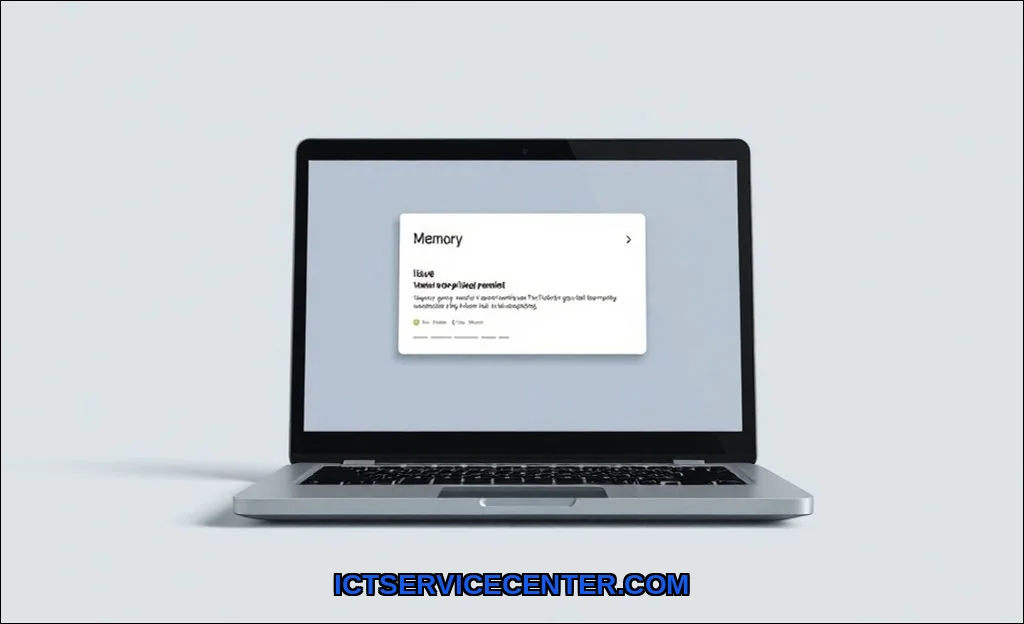
Understanding Laptop Memory Issues
First, let’s clarify what we’re talking about. RAM (Random Access Memory) is your laptop’s short-term workspace. It holds the data your processor needs right nowthe open browser tabs, your document, that music player. When you have a laptop memory issue, it means this workspace isn’t functioning correctly. This is different from a hard drive problem, which affects your stored files.
A RAM failure isn’t always a complete breakdown. Often, it’s a partial failure. One memory cell goes bad, and your system only crashes when it tries to use that specific spot. This is why problems can seem random. You might run a game for hours without trouble, but opening a large spreadsheet causes a crash. That’s the nature of a laptop memory issue.
For many users, especially those on newer systems, upgrading to a higher capacity is a smart move. For this project, many professionals recommend using the Crucial 32GB DDR5 which is available here. It can provide a significant performance boost and help prevent future memory-related slowdowns.
Common Symptoms of a Memory Problem
Knowing what to look for is half the battle. The symptoms of a laptop memory issue often mimic other problems, so it helps to be specific. Here are the most reliable signs:
System Instability
- Blue screen error (BSOD) with messages like “MEMORY_MANAGEMENT” or “PAGE_FAULT_IN_NONPAGED_AREA”.
- Random freezes where your mouse cursor stops moving entirely.
- Applications that crash to the desktop without warning, especially when handling large files.
Performance Degradation
- Your laptop feels sluggish even when you’ve just rebooted.
- Programs take longer to open than they used to.
- Your system struggles to multitask. Switching between a few browser tabs feels painful.
Boot and Startup Problems
- Your laptop fails to boot, or it beeps repeatedly at startup. (Those beeps are a POST codelook them up for your laptop brand.)
- The system boots but immediately runs into errors.
If you’re seeing any of these, especially the blue screen error, it’s time to run some tests. Don’t panic. This is a diagnostic process, not a verdict.
Step-by-Step Diagnostic Process
Let’s get systematic. We’ll start with software tools before touching any hardware. This approach saves time and reduces risk.
Step 1: Use the Built-In Windows Memory Diagnostic
- Press Windows Key + R, type
mdsched.exe, and press Enter. - Choose “Restart now and check for problems (recommended)”.
- Your laptop will reboot and run a system memory test. This can take 20-30 minutes.
- After it finishes, Windows will boot. The results appear in a notification after you log in. You can also view them in Event Viewer under “Windows Logs > System”, looking for “MemoryDiagnostics-Results”.
This tool is excellent for a quick check. It catches many common errors. But it’s not exhaustive. If you want a deeper scan, you need a dedicated tool.
Step 2: Run MemTest86 for Deeper Analysis
MemTest86 is the industry standard for memory diagnostic testing. It runs outside of Windows, which means it can test your RAM without any operating system interference.
- Download MemTest86 (the free version is sufficient) and create a bootable USB drive.
- Boot your laptop from that USB drive.
- The test will run automatically. Let it complete at least one full pass (four passes is more thorough).
- If you see any red errors, your RAM is faulty.
Important: MemTest86 takes time. A single pass on a 16GB system can take 2-3 hours. Plan accordingly.
Step 3: Check Your Current Memory Usage
Before assuming hardware failure, rule out software overload. Open Task Manager (Ctrl + Shift + Esc) and go to the “Performance” tab. Look at “Memory”. If you’re consistently at 90%+ usage with nothing heavy running, you likely need a memory upgrade, not a repair.
Software Fixes for Memory Errors
Not every laptop memory issue is a hardware failure. Sometimes the problem is in the software layer. Before you buy new RAM, try these fixes. They’re free and quick.
Adjust Virtual Memory Settings
Virtual memory uses your hard drive as a RAM overflow. If it’s misconfigured, you can get errors.
- Search for “Advanced system settings” in Windows.
- Under Performance, click “Settings”, then the “Advanced” tab.
- Under Virtual memory, click “Change”.
- Uncheck “Automatically manage paging file size”.
- Set your initial and maximum size to 1.5x your physical RAM. (For 8GB RAM, set both to 12288 MB).
- Click “Set”, then “OK”, and reboot.
Check for Driver Conflicts
Outdated or corrupt drivers can cause memory allocation errors. This is especially true for graphics and chipset drivers. If you’ve recently updated a driver and started seeing issues, roll it back. For more on this, you can explore our detailed guide on how to fix driver issues on a laptop.
Run a System File Checker Scan
Corrupted system files can mimic a laptop memory issue.
- Open Command Prompt as Administrator.
- Type
sfc /scannowand press Enter. - Let it run. It will repair any corrupted files it finds.
When to Consider a Hardware Upgrade or Repair
If your software fixes didn’t work and the memory diagnostic tools returned errors, you’re looking at a hardware problem. At this point, you have two paths: upgrade or repair.
The Upgrade Path
Upgrading your RAM is often the most cost-effective solution. It’s one of the few laptop upgrades that genuinely makes an older system feel new again. Here’s what to consider:
| Consideration | Details |
|---|---|
| Compatibility | Check your laptop’s specs. You need the right type (DDR4 or DDR5), speed (e.g., 3200MHz), and form factor (SO-DIMM). |
| Capacity | 16GB is the sweet spot for most users. 32GB is for heavy multitaskers, video editors, and virtual machine users. |
| Dual Channel | Use two matching sticks for better performance. A 2x8GB kit often outperforms a single 16GB stick. |
If your laptop has soldered RAM (common in ultrabooks), you cannot upgrade it. In that case, you’re looking at a motherboard replacement or a new laptop. For a detailed comparison of performance fixes before buying new hardware, see our guide on how to fix a slow laptop without upgrading.
The Repair Path
Sometimes the issue isn’t the RAM module itself. It could be the slot or the motherboard.
- Reseat the RAM: Power down, remove the battery (if removable), and take out the RAM sticks. Clean the contacts with a soft eraser, then firmly reinsert them. You’d be surprised how often this fixes a laptop memory issue.
- Test each slot: If you have two slots, test one stick in each slot. If the error follows the stick, the RAM is bad. If it follows the slot, the motherboard has a problem.
- Check for physical damage: Look for bent pins, burn marks, or corrosion on the RAM slot.
If you’re not comfortable opening your laptop, or if the issue is on the motherboard, it’s time to seek professional help. Many repair shops offer laptop memory repair services. For a broader perspective on when professional intervention is needed, check out this resource on 10 ways to know you need laptop repair.
Preventing Future Memory Issues
Once you’ve resolved your current laptop memory issue, you want to keep it that way. Here are practical habits to protect your RAM and your system overall.
Manage Your Workload
Don’t leave 30 browser tabs open all day. Each tab consumes memory. Use a tab suspender extension (like The Great Suspender) to free up resources. Close applications you’re not actively using.
Keep Your System Cool
Heat is a silent killer of electronic components. RAM degrades faster in high temperatures. Ensure your laptop’s vents are clear. Use a cooling pad if you run demanding applications. Dust buildup is a common cause of overheating.
Run Periodic Memory Checks
Make it a habit to run the Windows Memory Diagnostic every few months. It only takes 20 minutes and can catch problems before they cause data loss. Think of it like a dental checkup for your laptop.
Handle With Care
Physical shock can dislodge RAM or damage its connectors. Always shut down your laptop before moving it. When traveling, use a padded bag. A sudden drop can cause a RAM failure that wasn’t there before.
Monitor for Software Bloat
Some applications have memory leaksthey gradually consume more and more RAM over time. Keep an eye on Task Manager. If you see a program using 2GB+ consistently when it shouldn’t, investigate or uninstall it.
Addressing a laptop memory issue doesn’t have to be a stressful ordeal. By following this structured approachstarting with diagnostics, trying software fixes, and then considering hardware optionsyou can confidently resolve the problem. Your laptop is a tool, and like any tool, it sometimes needs maintenance. Now you know exactly how to provide it.