Best Laptop Cooling Designs for Performance & Longevity
Contents
I’ve lost count of how many laptops I’ve tested that promised the world, only to buckle under pressure. Literally. The fan screams, the keyboard gets uncomfortably warm, and suddenly my video render slows to a crawl. That’s thermal throttling in action, and it’s the single biggest performance killer most users never see coming. A great cooling design isn’t just about comfort; it’s the foundation of sustained performance, whether you’re gaming, editing, or just trying to get work done without the noise of a jet engine.
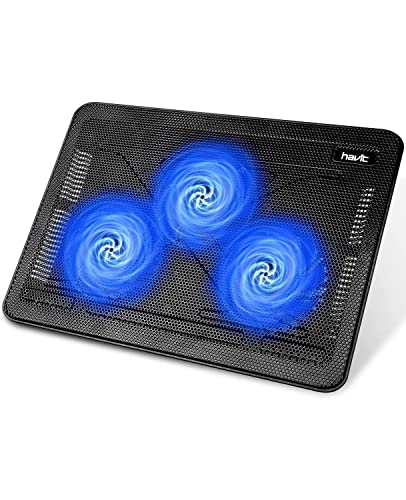
Before we dive into the hardware, let’s talk about a universal helper: the cooling pad. I’m skeptical of most gadgets, but a good pad can make a real difference, especially for older designs or intensive tasks. In my testing, the havit HV-F2056 156-17 consistently provided a noticeable drop in surface temperature and fan noise for larger 15-17 inch laptops. It’s a simple, effective first line of defense. But the real magicand the biggest differences between modelshappens inside the chassis.

Why Laptop Cooling Design Matters to Me
It’s personal. I’ve edited 4K video on a sleek, silent laptop that turned into a hot plate after 20 minutes. I’ve gamed on a machine that started strong but dropped frames as the clock speed plummeted. This isn’t about specs on a page. It’s about real-world reliability. A poor cooling system means your expensive CPU and GPU can’t run at their advertised speeds for long. It leads to premature wear, uncomfortable typing sessions, and that constant, nagging worry that you’re cooking your investment. For professionals, like those choosing the best laptop for graphic design, consistent thermal performance is non-negotiable.
Breaking Down the Core Cooling Components
Forget marketing jargon. When I open up a laptop, I’m looking for a cohesive system, not just a collection of parts. Heres what actually moves heat.
The Unsung Heroes: Heat Pipes and Vapor Chambers
Heat pipes are the workhorses. These sealed copper tubes contain a fluid that vaporizes at the hot end (over the CPU/GPU) and condenses at the cool end (near the fans), transferring heat incredibly efficiently. More pipes and wider pipes are generally better. A vapor chamber is like a heat pipe flattened into a two-dimensional plane. It spreads heat more evenly across a larger surface area, which is fantastic for cooling high-power components that are close together. You’ll often find vapor chambers in premium gaming rigs.
Fans and Ventilation: The Exit Strategy
All the heat in the world means nothing if it can’t escape. This is where airflow and ventilation design are critical. I look for multiple fans, larger fan blades that can move more air at lower RPMs (quieter!), and intelligently placed intake and exhaust vents. A common flaw is a design that looks cool but intakes air from the bottom, then immediately exhausts it right back into the path of the intake. Good airflow creates a clear, directed path for cool air to enter and hot air to leave. For a deep dive into how all these internal parts work together, this external guide on laptop components and their functions is a fantastic resource.
The Hidden Factor: Thermal Interface Material (TIM)
This is a major missing entity in most reviews. The quality of the thermal paste or pads between the chip and the heat sink matters immensely. A poor application or cheap material creates a thermal barrier. Some high-end manufacturers now use liquid metal compounds, which are far more efficient but also riskier to apply. It’s a key differentiator in out-of-the-box performance.
How Top Brands Tackle Heat: A Hands-On Comparison
Every brand has a philosophy. Heres what Ive observed from tearing them down and running them hard.
- ASUS: Their high-end ROG and ProArt lines heavily favor vapor chamber solutions. Ive been impressed with their dual-fan designs that have anti-dust tunnels. The software (Armoury Crate) gives you granular control over fan curves, which is a power user’s dream.
- MSI: They often go for sheer mass and countmultiple heat pipes, large fin stacks. Their Cooler Boost technology essentially maxes out the fans. It’s loud, but it works. Their strength is in brute-force heat dissipation.
- Alienware (Dell): Element 31 on their latest chips is a big dealit’s a gallium-silicone thermal interface that performs much better than standard paste. They also use a lot of copper and have unique chassis designs with raised rear ends to improve vent clearance.
- Apple: The M-series MacBooks are in a league of their own due to their unified architecture and low power draw. They use a passive heatsink spreader and a single fan for the Pro models. The efficiency is stunning, making them contenders for the quietest cooling system for a work laptop. No traditional heat pipes in sight.
The Chassis Material: Aluminum vs. Plastic
Another overlooked point. An aluminum chassis acts as a secondary heatsink, passively wicking away some warmth. It often feels warmer to the touch because it’s actually doing its job. A plastic chassis insulates more, which can lead to hotter internal temperatures unless the active cooling is exceptionally well-tuned.
The Real-World Trade-Off: Cooling vs. Performance & Noise
This is the eternal balancing act. You can have a cool, silent laptop. You can have a thin, powerful laptop. But nailing all three is the holy grail.
Pushing for maximum performance inevitably means more heat and louder fans. A “performance mode” in software usually just lets the fans spin faster. The key is how a laptop manages its thermal budget. Does it let the CPU spike to 95C for a short boost, then settle? Or does it cap temperatures lower for sustained, quieter operation? For the laptop with best thermal performance 2024, I’m looking for a design that manages high watts without sounding like it’s about to take off.
| Priority | Cooling Design Focus | Compromise |
|---|---|---|
| Maximum Performance (Gaming/Creation) | Large vapor chambers, multiple fans, high airflow | Thicker chassis, higher fan noise, more weight |
| Portability & Quiet (Business/Travel) | Efficient low-power chips, passive cooling, tuned fan curves | Lower peak CPU/GPU power, potential for warmth under load |
| Balanced (All-Rounder) | Smart heat pipe layouts, dual fans, user-selectable modes | May throttle slightly under extreme, prolonged load |
My Tips for Maximizing Your Laptop’s Cooling
You can’t redesign the internals, but you can absolutely optimize what you have.
- Elevate the Rear. Seriously. Use bottle caps, a book, or a stand. Giving the bottom intake vents room to breathe is the simplest, most effective trick. It improves airflow instantly.
- Dust is the Enemy. Blow out the vents with compressed air every few months. A clogged heatsink is a useless heatsink.
- Master the Software. Don’t just leave it on “Balanced.” For gaming, switch to a performance profile. For quiet work, use a silent mode. Many brands hide advanced fan controls in their BIOS or utility softwareexplore them.
- Mind Your Surface. Using a laptop on a blanket, pillow, or your lap smothers the vents. Always aim for a hard, flat surface.
- Consider a Repaste. If your laptop is a few years old and running hotter than it used to, the factory thermal paste may be dried out. Replacing it (if you’re comfortable) can work wonders. This is a key step in maintaining the best laptop for speed and performance over the long term.
Final Verdict: What I Look For in a Cooling Design
After testing so many systems, my checklist is simple. First, I look for a coherent thermal philosophy. Does the design make sense for the laptop’s intended power? A thin machine with a 45-watt CPU needs a vapor chamber or an exceptionally clever heat pipe layout.
Second, I value quiet efficiency over loud brute force. A system that can manage heat with lower fan speeds shows better engineering. Finally, I need control. Access to a BIOS or software that lets me tweak fan behavior is a sign the manufacturer respects power users.
For how to keep my gaming laptop from overheating, start with the basics: elevate it, clean it, and use the right power profile. If you’re buying new, prioritize cooling specs as much as CPU and GPU. That investment pays off every single day in smoother performance, less noise, and a machine that lasts. The best cooling design is the one you never have to think aboutit just works, silently and reliably, letting the hardware inside truly shine.