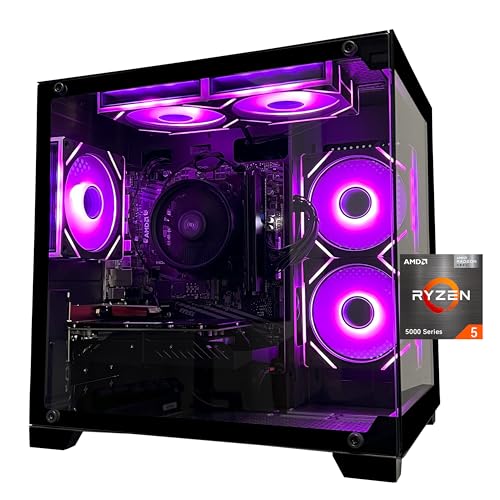
If you’ve ever walked into an electronics store or browsed online for a new desktop computer, you’ve likely seen the boxy, upright models that sit under a desk. That is a Tower PC. It’s the classic, modular form of a personal computer, distinct from laptops and all-in-one designs. At ictservicecenter.com, we see these machines daily, from silent office workhorses to roaring gaming rigs.
A Tower PC is essentially a computer chassis designed to sit vertically (standing upright) on a desk or floor. This PC form factor houses all core componentsmotherboard, CPU, GPU, storage, and power supplyin a dedicated case. Unlike an all-in-one, the monitor is separate. Unlike a laptop, you can open it up and swap parts freely. For most users seeking raw performance and upgradeability, this remains the gold standard.
What Is a Tower PC? (Definition and Overview)
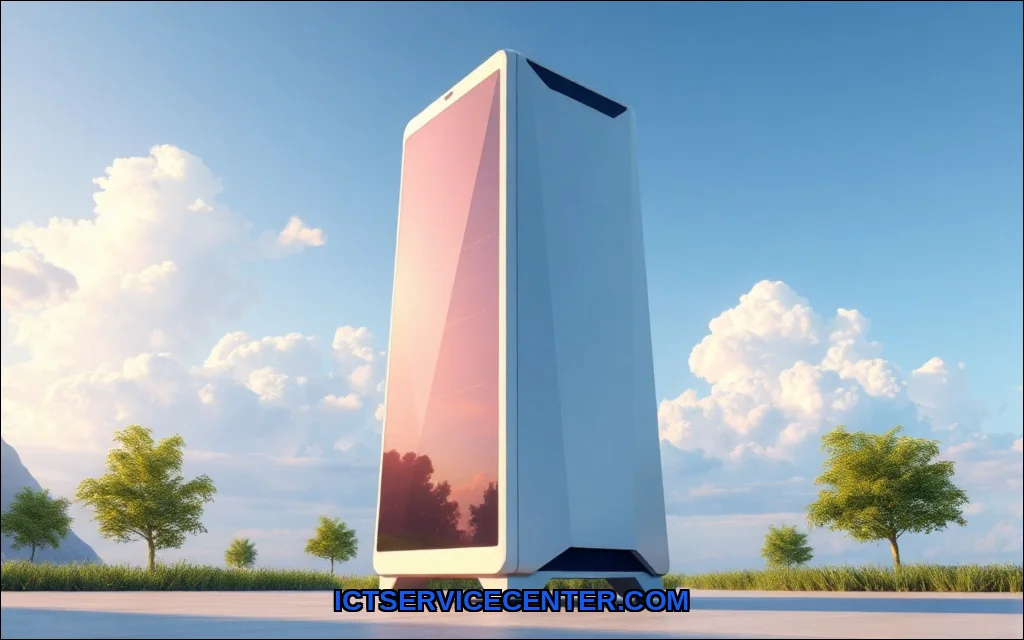
A Tower PC is a desktop computer where the main computing hardware is housed in a vertical, freestanding case. The term “tower” comes from the upright orientation, which differs from the older “desktop” form factor that sat horizontally under a monitor. Modern tower computer designs prioritize airflow, component accessibility, and thermal management. The other half of this decision is 5 major disadvantages.
The chassis itself is the backbone. It dictates what size motherboard you can use (typically ATX or smaller), how many expansion cards fit, and how much cooling you can install. Brands like Dell, HP, and Lenovo offer pre-built towers, but many enthusiasts build custom rigs.
For example, the Lenovo Legion Tower is a popular pick for gamers who want a factory-built machine that still allows for future RAM and storage upgradesbalancing convenience with the tower PC advantage of modularity.
Tower PC Form Factors: Full Tower, Mid Tower, Mini Tower
Not all towers are the same size. The form factor dictates what you can build and where it fits. Here’s the breakdown:
Full Tower
The largest consumer desktop tower. It supports ATX and even extended ATX (E-ATX) motherboards. You get room for multiple GPUs, triple-fan radiators, and up to a dozen drives. These are for extreme gaming builds, workstation PCs for 3D rendering, or enterprise server towers. They are heavy and require floor placement.
Mid Tower
The most common PC form factor on the market. A mid tower fits a standard ATX motherboard and offers enough space for a single high-end GPU, a 240mm or 360mm liquid cooler, and a few SSDs.
It’s the sweet spot for most gamers and professionals. You can place it on a desk or under it. Loaders in this spot often ask about getting laptop power consumption? a practical guide right as well.
Mini Tower (Small Form Factor)
Compact but still upright. A mini tower typically uses a Micro-ATX or Mini-ITX motherboard. It sacrifices expansion slots and cooling capacity for a smaller footprint. Great for home office PCs or media centers where space is tight. Some small form factor cases are barely larger than a shoebox.
Tower PC vs. All-in-One vs. Laptop: Key Differences
Understanding the tower pc vs desktop differences comes down to form factor and upgradeability. Here’s a comparison table:
| Feature | Tower PC | All-in-One (AiO) | Laptop |
|---|---|---|---|
| Form Factor | Vertical case, separate monitor | Integrated screen and components | All-in-one portable unit |
| Upgradeability | High (swap GPU, RAM, storage, CPU) | Low (usually RAM and storage only) | Very low (often soldered components) |
| Cooling | Excellent (large fans, liquid cooling) | Fair (limited space) | Constrained (thermal throttling common) |
| Performance | Maximum (unlocked CPUs, full-size GPUs) | Good (mobile or low-power desktop parts) | Limited by power and thermal envelope |
| Portability | Poor (heavy, needs separate monitor) | Moderate (one piece, but heavy) | Excellent (built-in battery and screen) |
When asking is a tower pc better for gaming, the answer is almost always yes. A gaming tower can house a full-size RTX 4090 and a high-TDP Intel Core i9 without thermal throttling. A laptop with similar specs will run louder, hotter, and cost significantly more.
Who Should Use a Tower PC? (Ideal Use Cases)
A Tower PC isn’t for everyone, but it excels in specific scenarios:
Gamers and Enthusiasts
If you want 4K gaming at 120 FPS or VR experiences, a gaming tower is your only realistic option. You can swap your GPU every two years without replacing the whole machine. This is the primary answer to what is a tower pc used for in the consumer space.
Content Creators and Professionals
Video editors, 3D modelers, and data scientists need workstation PC horsepower. A tower lets you install multiple NVMe drives, a professional-grade GPU (like an NVIDIA RTX A-series), and 64GB or more of RAM. The desktop computer form factor also allows for silent operation with large heatsinks. Before you buy anything, it is worth looking at essential desktop setup.
Home Office and Business Users
For tasks like accounting, programming, or general office work, a mid tower offers better value than a laptop. You get a larger, more comfortable keyboard and a bigger monitor. Plus, if a part fails, you can replace it yourself instead of sending the whole machine in for repair.
Enterprise and Server Environments
While many servers are rack-mounted, enterprise server towers are common in small businesses. These are essentially full tower systems with ECC RAM, RAID controllers, and redundant power supplies. They sit in a closet or IT room and serve files or host applications.
Core Components Inside a Tower PC
Understanding the parts inside a tower case helps you make smarter buying decisions. Here’s what you’ll find:

– Motherboard: The main circuit board. Most towers use ATX or Micro-ATX. This dictates your expansion options.
– CPU: The processor.
Towers can use desktop-grade chips with higher TDPs (65W-150W+) than laptops.
– GPU: The graphics card. Full-size, dual-slot or triple-slot cards fit easily in a mid tower or larger.
– RAM: Desktop DIMMs.
Easily upgradeable to 64GB or 128GB.
– Storage: Multiple M.2 SSDs and 3.5-inch HDDs. A desktop tower often has 4-8 drive bays.
– Power Supply: A standard ATX PSU.
Easy to replace if it fails or if you need more wattage.
– Cooling: Tower coolers, AIO liquid coolers, and multiple case fans. The computer chassis design directly impacts airflow.
Advantages and Disadvantages of a Tower PC
Let’s be honest about the trade-offs.
Advantages
– Upgradeability: You can replace any component. This extends the lifespan significantly.
– Performance: No thermal throttling. Full-size components run faster and last longer.
– Cost Efficiency: You get more performance per dollar compared to laptops or AiOs.
– Repairability: Parts are standard. You can fix it yourself with basic tools.
– Customization: Choose your case, lighting, and cooling. It’s your machine.
Disadvantages
– Space: Requires desk or floor space. A full tower is especially bulky.
– Portability: Moving a tower computer is a hassle. LAN parties are rare for a reason.
– Peripheral Costs: You need a separate monitor, keyboard, and mouse.
– Power Consumption: A high-end gaming tower can draw 500W-1000W under load.
How to Choose the Right Tower PC for Your Needs
Start by defining your use case. If you’re a gamer, prioritize GPU clearance and cooling in the computer chassis. A mid tower with good airflow is usually sufficient. If you’re building a silent workstation, look for cases with sound-dampening foam and large, slow-spinning fans. There is more on 5 reasons why in a separate guide.
For most people, we recommend a mid tower with an ATX motherboard. It offers the best balance of expansion, cooling, and size. If you’re on a budget or need a small footprint, a mini tower with a Micro-ATX board works well. Avoid full tower unless you truly need multiple GPUs or a custom water loop.
When comparing brands, Dell’s XPS towers offer solid build quality for professionals, while HP’s Omen line targets gamers. Lenovo’s Legion series, as mentioned, provides a good middle ground. For custom builds, you choose your own tower case from brands like Fractal Design, Corsair, or NZXT.
If you’re still weighing options, check our guide on the best desktop tower PC for current recommendations. And if you’re torn between designs, our comparison of tower PC vs all-in-one PC breaks down the real-world trade-offs.
Final Thoughts
A Tower PC remains the most flexible, powerful, and cost-effective form factor for desktop computing. Whether you’re gaming, rendering, or running a small business server, the modular design lets you adapt over time.
You don’t buy a tower for todayyou buy it for the next five years of upgrades. The desktop computer market continues to evolve, but the tower’s dominance in raw performance is unlikely to fade.
For a deeper dive into how computers work at a fundamental level, Britannica offers a solid technical overview of computer technology and its history.