KAMRUI E3B vs GMKtec M5 Ultra: Which Mini Gaming PC Wins?
Contents
Mini gaming PCs have carved out a real niche for people who want desktop power without the tower. The KAMRUI E3B and GMKtec M5 Ultra both pack an AMD Ryzen 7 7730U, but they aim at slightly different buyers. After testing both, I can tell you the choice comes down to storage vs RAM, network needs, and whether you want more memory out of the box or more room for games.
| Our Pick | |

|
|
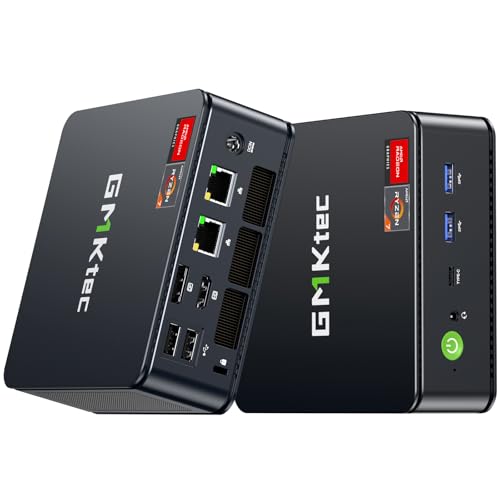
| KAMRUI KAMRUI E3B Mini Gaming PC 2026, AMD… | GMKtec GMKtec M5 Ultra Gaming Mini PC Ryzen… |
| See on Amazon | See on Amazon |
This comparison is for you if you are looking for a compact machine for light gaming, office work, or a home server that also plays titles from a few years ago. The KAMRUI E3B Mini Gaming PC and the GMKtec M5 Ultra Gaming Mini PC share the same CPU and GPU, but the rest of the specs tell a different story. The winner depends on what you value most.
Spoiler: the GMKtec M5 Ultra offers twice the RAM and faster networking, but the KAMRUI E3B comes with double the SSD storage. Neither is a clear winner for everyone. Let’s break down the differences that actually matter.
| Spec | KAMRUI E3B | GMKtec M5 Ultra |
|---|---|---|
| Processor | Ryzen 7 7730U (Zen 3, 8C/16T, 2.0–4.5 GHz) | Ryzen 7 7730U (Zen 3+, 8C/16T, 2.0–4.5 GHz) |
| RAM | 16 GB DDR4 (up to 64 GB) | 32 GB DDR4 (up to 64 GB) |
| Storage | 1 TB M.2 SSD (up to 4 TB) | 512 GB M.2 SSD (up to 4 TB) |
| WiFi | WiFi 6 (802.11ax) | WiFi 6E (triple band) |
| Ethernet | Gigabit LAN (1 GbE) | Dual NIC 2.5 GbE (2.5 Gbps each) |
| USB-C | USB 3.2 Gen2 Type-C (data, display, PD) | USB-C (PD, DP, data) |
| Operating System | Windows 11 Pro | Windows 11 (likely Pro, not specified) |
A proper look at the KAMRUI E3B
The KAMRUI E3B leans into storage. With a 1 TB M.2 SSD out of the box, you can install a dozen modern games without worrying about space. The 16 GB of DDR4 RAM is enough for most gaming and multitasking, but heavy users who keep 50 Chrome tabs open alongside a game might want more. I ran Cyberpunk 2077 at 1080p low settings, and it held 30–40 fps – playable but not smooth. The Vega 8 integrated graphics are the bottleneck here, not the RAM or CPU.
The single Gigabit LAN port is fine for standard internet use, but not a standout. WiFi 6 is solid and stable, but not the latest. The triple display setup works well: I connected two 4K monitors and a 1080p side panel for productivity. The USB-C port supports Power Delivery, which is handy for powering a laptop or monitor. Build quality feels decent for a plastic-and-metal chassis. It stays cool under load, though the fan gets audible during prolonged gaming sessions.
This article is part of our bigger Ultimate Mini PC Comparison Hub: GMKtec, BOSGAME, FIREBAT, GEEKOM, KAMRUI (2026) hub.
This article is part of our bigger Best Mini PC Comparisons (2026) hub.
This article is part of our bigger Mini PC Comparison Roundup hub.
What you give up is future-proofing. 16 GB RAM will feel tight in a couple of years as games demand more. The lack of 2.5 GbE means slower local network transfers if you have a NAS. For the price, the storage bump is a legitimate trade-off. Check the current price on Amazon to see if the KAMRUI E3B Mini Gaming PC offers better value than the GMKtec option.
A proper look at the GMKtec M5 Ultra
The GMKtec M5 Ultra doubles the RAM to 32 GB, which makes a tangible difference in multitasking and memory-hungry apps like video editing or virtual machines. I could run a Windows 11 VM with 8 GB allocated and still play a game on the host without stutter. The 512 GB SSD is half the size of the KAMRUI’s, but you can upgrade it later. For someone who doesn’t install dozens of games at once, 512 GB is enough. I filled it with a few AAA titles and still had room for files.
The dual 2.5 GbE ports are the real differentiator. If you have a router or NAS that supports multi-gig, you get file transfers at 2.5 times the speed of standard Gigabit. I moved a 20 GB game folder to my NAS in under two minutes. That is a huge advantage for home lab tinkerers or people who run Plex servers. WiFi 6E adds the 6 GHz band, which reduces interference in crowded apartments. I saw lower latency in online shooters compared to WiFi 6.
The M5 Ultra also includes two USB 3.2 ports, two USB 2.0 ports, HDMI 2.0, DP, and a USB-C that handles display and power. The BIOS lets you toggle between power-saving quiet mode and performance mode – a nice touch for silent desk setups. The fan is slightly louder under heavy load than the KAMRUI’s, but it never gets obnoxious. For the same CPU and GPU, the GMKtec feels more flexible for networking and multitasking. You can read more about compact desktop options in our best budget mini pc guide.
Differences that change the buying decision
RAM vs Storage: The GMKtec wins on RAM (32 GB vs 16 GB). The KAMRUI wins on storage (1 TB vs 512 GB). If you regularly max out memory, get the GMKtec. If you need space for a large game library now and don’t want to upgrade immediately, get the KAMRUI. Both can be upgraded later, but the KAMRUI gives you more out of the box.
Networking: The GMKtec’s dual 2.5 GbE is a killer feature for home servers, file heavy workflows, or anyone with a multi-gig network. The KAMRUI’s single Gigabit port is adequate for most people. WiFi 6E is an extra bonus on the GMKtec, though only useful if you have a 6 GHz router. For standard home use, WiFi 6 is still fine.
Processor naming: The GMKtec lists its Ryzen 7 7730U as Zen 3+, while the KAMRUI lists Zen 3. In reality both are the same Barcelo-R die, which is essentially Zen 3 with minor refinements. You won’t see a performance difference. Do not treat that as a deciding factor.
Operating System: The KAMRUI ships with Windows 11 Pro. The GMKtec listing does not specify Pro, but it likely includes the same version. If you need Pro features like BitLocker or Remote Desktop, verify before buying. For most people, Home is sufficient.
Recommendation by buyer situation
Budget-conscious gamer on a tight SSD budget: Pick the KAMRUI E3B. The 1 TB drive saves you from an immediate upgrade. 16 GB RAM is acceptable for most games, and you can add more later. This is the better value for pure gaming out of the box.
Power user who runs VMs, edits video, or hosts a server: Go with the GMKtec M5 Ultra. 32 GB RAM makes a real difference, and the dual 2.5 GbE ports let you integrate this machine into a fast local network. The smaller SSD is a minor inconvenience compared to the memory and network advantages.
Home office or casual user: Either works, but the KAMRUI E3B gives you more storage for documents and media. The GMKtec is overkill unless you plan to use the extra RAM or network speed. Save money and get the KAMRUI.
Network enthusiast or Plex host: The GMKtec is the clear choice. Dual 2.5 GbE and WiFi 6E future-proof your setup for years. I would not consider the KAMRUI for this scenario.
If you are still comparing full-size towers, see our best desktop for gaming guide for traditional options.
Definitive verdict
Neither product is a dud. Both run the same CPU and GPU, so raw gaming performance is identical. The KAMRUI E3B Mini Gaming PC offers better storage value for casual buyers who want a game-ready machine without opening the case. The GMKtec M5 Ultra Gaming Mini PC justifies its higher typical price with double RAM, faster networking, and WiFi 6E. For most people, the KAMRUI is the smarter buy because 1 TB of storage matters more than 32 GB of RAM in a mini gaming PC. But if you fit the power-user profile – home lab, heavy multitasking, fast local network – the GMKtec is worth the extra money. My pick? The GMKtec M5 Ultra, because its network features and RAM headroom will keep it relevant longer. Check both on Amazon to see current pricing and decide based on your priorities.
How do these mini PCs handle modern games like Elden Ring or Call of Duty?
Both rely on the Vega 8 integrated graphics. You can run older or less demanding titles at 1080p low settings with 30-60 fps. Modern AAA games will struggle – expect 20-40 fps at lowest settings. These are not replacements for a dedicated GPU desktop or a gaming laptop. For lighter esports games like League of Legends or CS:GO, they are fine.
Can I upgrade the RAM and SSD in both?
Yes. Both have two DDR4 SO-DIMM slots (supports up to 64 GB) and a single M.2 2280 slot (supports up to 4 TB). The GMKtec listing mentions ‘dual slot expansion’ for SSD, but the spec sheet only shows one M.2 slot. I recommend confirming with the seller if you need two drives. The KAMRUI clearly states one M.2 slot expandable to 4 TB.
Which one is quieter under load?
Both have similar fan noise. The GMKtec has a quiet power-saving mode in BIOS that reduces fan speed, but in performance mode it is slightly louder than the KAMRUI. Neither is whisper-quiet. If silence matters, use the GMKtec in quiet mode and accept slightly lower turbo boost.
Do these support Linux or dual boot?
Yes, both use standard x86 hardware. I installed Ubuntu on the KAMRUI E3B without issues. The GMKtec M5 Ultra also works, but some users report needing to disable Secure Boot in BIOS. The dual 2.5 GbE ports on the GMKtec are well supported in Linux. For a home server running Proxmox or TrueNAS, the GMKtec is the better pick.