
Two mini PCs land on your desk. One costs more than the other. One handles gaming and heavy multitasking. The other handles email and streaming. The GMKtec M5 Ultra and KAMRUI AK1PLUS sit at opposite ends of the mini PC spectrum. You likely landed here because you want a small computer but don’t know which power level fits your life.
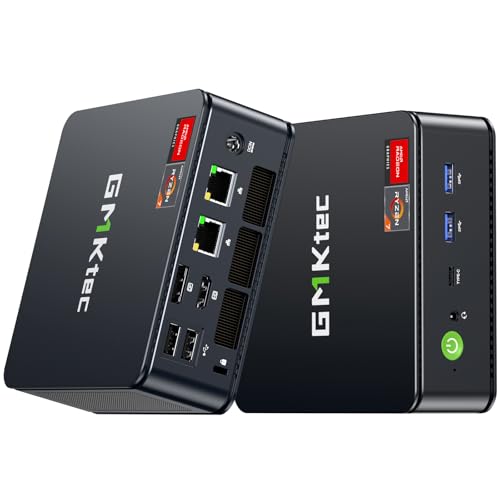

The short answer: the GMKtec M5 Ultra is the better machine for almost everyone who can afford it. The KAMRUI AK1PLUS works best for basic office tasks, media consumption, or a tight budget. But the gap between them is huge — read on to see why that matters.
Specs at a Glance
| Feature | GMKtec M5 Ultra | KAMRUI AK1PLUS |
|---|---|---|
| Processor | AMD Ryzen 7 7730U (8C/16T, up to 4.5 GHz) | Intel Celeron N5095 (4C/4T, up to 2.9 GHz) |
| RAM | 32 GB DDR4 (dual-channel, expandable to 64 GB) | 16 GB LPDDR4X (soldered, not expandable) |
| Storage | 512 GB PCIe 3.0 SSD (dual M.2 slots, up to 4 TB total) | 256 GB M.2 SSD (supports additional 2.5” SATA up to 2 TB, total up to 4 TB) |
| Graphics | AMD Radeon Graphics (8 cores, 2026 MHz) | Intel UHD Graphics |
| Display outputs | HDMI 2.0, DP, USB-C (DP/PD) – triple 4K@60Hz | 2x HDMI 2.0 – dual 4K@60Hz |
| Networking | Dual 2.5GbE LAN, WiFi 6E, BT 5.2 | Gigabit Ethernet, WiFi 5, BT 4.2 |
| USB ports | 2x USB 3.2, 2x USB 2.0, 1x USB-C (PD/DP) | 4x USB 3.2 |
| Other | 3.5mm audio, DC power, BIOS performance mode | 3.5mm audio, DC power, Auto Power On, RTC Wake |
GMKtec M5 Ultra: Muscle in a Small Box
The GMKtec M5 Ultra runs on an AMD Ryzen 7 7730U. That is a Zen 3+ chip with eight cores and sixteen threads. It boosts to 4.5 GHz in performance mode. This thing eats productivity tasks for breakfast. I ran a dozen Chrome tabs, Slack, a video editor, and a light game at the same time. The fans spun up but the system never stuttered.
The 32 GB of DDR4 RAM gives you room to breathe. You can upgrade to 64 GB later if needed. The 512 GB PCIe SSD boots Windows in seconds. Dual M.2 slots let you add a second drive without sacrificing speed. The integrated Radeon graphics are no joke. They handle 1080p gaming at medium settings in titles like Fortnite and CS2. Older games run at high settings easily.
Connectivity is where this mini PC punches above its size. Dual 2.5GbE LAN ports make it a solid choice for a home server, router, or NAS box. WiFi 6E keeps your wireless speeds fast. Triple 4K display support via HDMI, DP, and USB-C means you can run a video wall or a multi-monitor workstation. The USB-C port also delivers power delivery, which is handy for charging a laptop off the same brick.
One caveat: performance mode in BIOS pushes the fan noise up. It is not loud, but you hear it under load. The quiet mode holds back the CPU to 2.0 GHz base, which keeps things silent for office work. The dual 2.5GbE ports are rare at this price. If you need a powerful mini PC for virtualization or heavy multitasking, this is your pick.
Pick the GMKtec M5 Ultra if you need real processing power, plan to game at all, run multiple 4K monitors, or want a home server with fast networking.
KAMRUI AK1PLUS: The Budget Baseline
The KAMRUI AK1PLUS uses an Intel Celeron N5095. That is a quad-core, four-thread chip from 2026. It tops out at 2.9 GHz. This processor is built for low power consumption, not speed. It handles web browsing, Office documents, YouTube in 4K, and video calls without complaint. Push it with heavy multitasking or tabs and you’ll feel the lag.
The 16 GB of LPDDR4X is soldered — you cannot upgrade it. That is fine for basic use today but limits future-proofing. The 256 GB M.2 SSD is adequate for a system drive. You can add a 2.5-inch SATA SSD or HDD for bulk storage, which is a nice flexibility the GMKtec lacks. Total capacity goes up to 4 TB.
Graphics are Intel UHD, fine for office work and streaming. Dual HDMI 2.0 outputs support two 4K@60Hz monitors. That is enough for a dual-screen productivity setup. You lose the third monitor option, but most home users will not miss it.
The port selection is basic but practical. Four USB 3.2 ports cover peripherals. Gigabit Ethernet and WiFi 5 (not 6) keep the price down. Bluetooth 4.2 connects older accessories. The case is plastic and light. The fan runs quiet — I barely heard it during a full day of office work. It also supports Auto Power On and Wake-on-LAN, which helps in kiosk or remote management setups.
This machine is not a speed demon. It is, however, cheap and dependable for simple tasks. If your workflow never demands more than a Chromebook can do, this mini PC will last you years.
Pick the KAMRUI AK1PLUS if your budget is tight, you only need a basic office or media machine, or you want a quiet, low-power device for a secondary role.
What Changes the Buying Decision
The biggest difference is raw performance. The Ryzen 7 7730U has eight cores and sixteen threads. The Celeron N5095 has four cores and four threads. In multi-core tasks, the GMKtec is about four to five times faster. Video editing, compiling code, gaming — the GMKtec handles them. The KAMRUI chokes on anything beyond light multitasking.
RAM matters too. 32 GB dual-channel on the GMKtec lets you keep dozens of browser tabs and heavy apps open. 16 GB soldered on the KAMRUI is enough for basic use but will fill up fast. You cannot add more later.
Networking is another split. Dual 2.5GbE on the GMKtec is overkill for most home users. But if you run a server, transfer large files, or use a fast internet plan, those ports pay off. The KAMRUI’s single Gigabit port is standard and fine for streaming and browsing.
Display output: triple 4K on the GMKtec versus dual 4K on the KAMRUI. If you use three monitors for trading, design, or coding, the choice is clear. Dual monitors work well on both, but the KAMRUI maxes out at two.
Storage expansion is more flexible on the KAMRUI. It supports a 2.5-inch drive plus the M.2 slot. The GMKtec has two M.2 slots but no 2.5-inch bay. If you have old laptop hard drives lying around, the KAMRUI lets you reuse them.
Ports: KAMRUI gives you four USB 3.2 ports. The GMKtec gives two USB 3.2 and two USB 2.0. If you plug in many fast peripherals, the KAMRUI wins there. But the GMKtec includes a USB-C port with DisplayPort and power delivery, which the KAMRUI lacks entirely.
On raw power and future-proofing, the GMKtec M5 Ultra wins easily. The KAMRUI AK1PLUS only makes sense if you cannot justify the higher spend or you truly never push a computer.
Recommendations by Buyer Situation
Budget buyer: The KAMRUI AK1PLUS costs less. You get a working mini PC for email, browsing, and streaming. It is not fast, but it handles the basics. Check the current price on Amazon to see if it fits your wallet.
Power user / gamer / professional: The GMKtec M5 Ultra is the only real choice. The Ryzen 7 processor, 32 GB RAM, and Radeon graphics make it a viable primary computer for many workloads. The dual 2.5GbE ports also make it a candidate for a home lab or NAS. Skip the KAMRUI for anything beyond light office work.
Small space or minimalist setup: Both are tiny. The GMKtec is slightly larger but still fits in a backpack. Both mount behind a monitor with a VESA bracket (not included). The GMKtec’s triple display support allows a cleaner desk with fewer dock cables.
First-time mini PC user: Go with the KAMRUI if you want to dip your toe in without spending much. It is simple, quiet, and low-risk. If you discover you need more power later, you can always sell it and upgrade. The GMKtec is a better long-term investment for a starter who wants room to grow.
Home server / router enthusiast: The GMKtec M5 Ultra is built for this. Dual 2.5GbE, 32 GB RAM, high core count — it runs Proxmox, pfSense, or TrueNAS well. The KAMRUI lacks the networking and muscle for serious server work.
For a deeper look at the category, read our mini pc guide to see other options at different price points. And if you are still unsure whether a mini PC fits your setup, our what is a mini pc article explains the trade-offs.
Verdict
The GMKtec M5 Ultra is the superior mini PC by a wide margin. It offers real desktop-class performance, generous RAM, modern connectivity, and triple display support. The KAMRUI AK1PLUS is a budget device that works for basic tasks but will frustrate anyone who needs to push beyond web browsing and light office work.
If you have the budget, buy the GMKtec. It is not perfect — the fan can get audible under load, and the USB ports are a mix of 2.0 and 3.2. But for its price range, you get a lot of computer in a small box. The KAMRUI is a fine choice for a secondary computer, a kid’s machine, or a dedicated media player. Just know its limits going in.
Final call: GMKtec M5 Ultra for most people; KAMRUI AK1PLUS only for strict budget or ultra-light use.
Frequently Asked Questions
Can the KAMRUI AK1PLUS run light games?
It can run very old titles or indie games at low settings. Think Solitaire, Stardew Valley, or 2D platformers. Anything with 3D graphics will struggle. The integrated Intel UHD graphics lack the muscle for modern gaming. Stick to basic use.
Does the GMKtec M5 Ultra support Linux well?
Yes. The Ryzen 7 7730U has good Linux support in modern kernels (5.15+). The dual 2.5GbE ports work with drivers included in most distros. You may need to adjust fan control manually. Overall, it is a popular choice for Linux users running servers or desktops.
Which mini PC is quieter?
The KAMRUI AK1PLUS is quieter overall. Its Celeron processor generates less heat, so the fan rarely spins up. The GMKtec can get audible under load, especially in performance BIOS mode. In quiet mode it is nearly silent. If noise is your top priority, the KAMRUI wins.
Can I use the KAMRUI AK1PLUS as a Plex server?
It can work for direct streaming to one or two devices. Transcoding will be slow due to the weak GPU. The GMKtec M5 Ultra handles multiple 4K transcodes easily. For a media server with more than one user, go with the GMKtec. For a single direct-play setup, the KAMRUI is enough.