Fix a Laptop Touchpad Not Working in 5 Steps
Contents
Your laptop’s touchpad has stopped working. The cursor is stuck, taps don’t register, and the familiar two-finger scroll is gone. It’s a frustrating problem that can bring your workflow to a halt. Before you worry about a major hardware failure, know that most touchpad issues are solvable with a systematic approach.
This guide walks you through a logical sequence of fixes, from the simplest checks to more advanced solutions. We’ll cover software settings, driver conflicts, and hardware diagnostics. If you need a reliable temporary input solution while troubleshooting, many users find a simple wireless mouse like the Logitech M185 Wireless to be an indispensable tool to keep working.
Quick Fixes: Start with the Basics
Always begin with the easiest potential causes. These steps take seconds and often resolve the issue immediately.
Check for a Physical Disable Button or Key
Many laptops have a dedicated button to toggle the touchpad on and off, often located near the pad itself. More commonly, a Function (Fn) key combination is used. Look for a touchpad icon (usually a rectangle with a finger) on your F1-F12 keys. Pressing Fn + that key will enable or disable the trackpad. Try it twice to ensure it’s toggled to the “on” position.
Restart Your Computer
It sounds trivial, but a restart clears temporary system glitches that can cause your touchpad not responding. This is especially relevant if the problem started after waking from sleep or hibernation.
Clean the Touchpad Surface
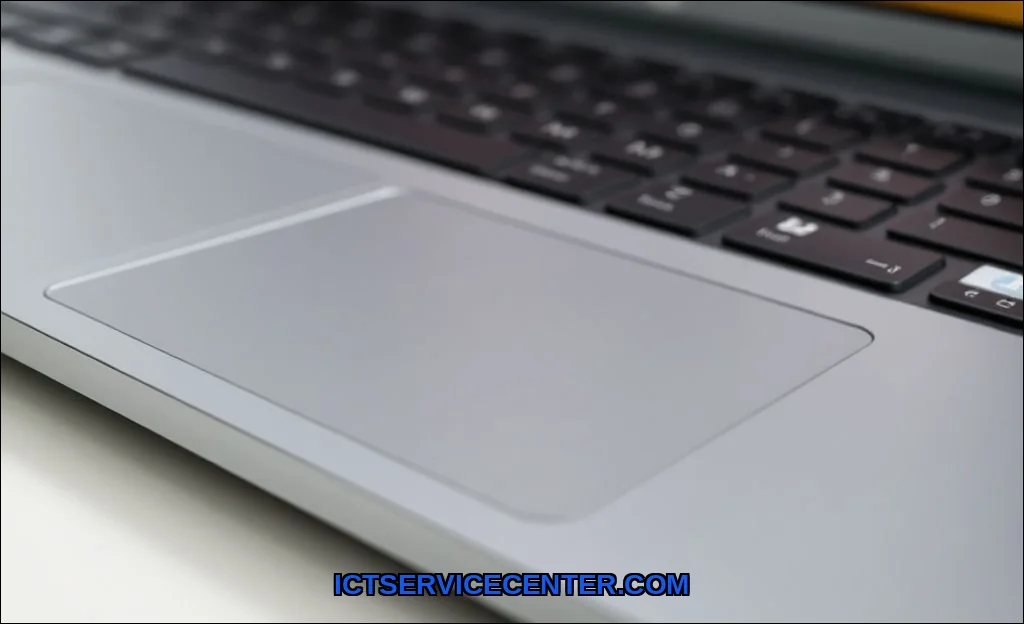
Oils, dust, and moisture can interfere with the capacitive sensors. Power down the laptop. Gently wipe the touchpad with a soft, slightly damp lint-free cloth, then dry it thoroughly. Avoid harsh chemicals. For more detailed care, our guide on how to maintain laptop touchpad performance offers extended tips.
Software Solutions: Drivers and Settings
If the basics don’t work, the issue likely lies in your laptop’s software configuration or drivers.
Verify Touchpad Settings in Windows
Windows has built-in settings that could be disabling your touchpad.
- Go to Settings > Bluetooth & devices > Touchpad.
- Ensure the touchpad is set to “On.”
- Check that the sensitivity is set appropriately and that taps are enabled.
- Look for a setting like “Leave touchpad on when a mouse is connected” and toggle it.
A common scenario is touchpad not working but mouse works, which is frequently caused by this last setting.
Update or Reinstall the Touchpad Driver
The touchpad driver is the software that lets your OS communicate with the hardware. Corrupted or outdated drivers are a prime culprit.
- Right-click the Start button and select Device Manager.
- Expand “Mice and other pointing devices.”
- Right-click your touchpad driver (it may be listed as a “PS/2 Compatible Mouse,” “Synaptics,” or “ELAN” device) and select “Update driver.”
- Choose “Search automatically for drivers.”
- If that doesn’t work, right-click again and select “Uninstall device.” Restart your computer. Windows will attempt to reinstall a fresh driver upon reboot.
Issues like touchpad not working after update or touchpad not working windows 11 are often fixed here. For brand-specific drivers, visit your manufacturer’s support site (Dell, HP, Lenovo) and download the latest touchpad driver directly.
Check for Third-Party Software Conflicts
Security software, optimization utilities, or even other peripheral software can sometimes disable touchpad functionality. Try temporarily disabling your antivirus or any “touchpad enhancement” software to see if the problem resolves.
Hardware Checks: Physical and Connection Issues
If software tweaks fail, a physical problem may be the cause. Proceed with caution.
Run a Built-in Hardware Diagnostic
Most major brands include a pre-boot diagnostic tool. Restart your laptop and press the key indicated during startup (often F12 for Dell, F2 for HP, or F10 for Lenovo) to access the diagnostic menu. Run the hardware diagnostic tests, specifically for the keyboard and touchpad. This can identify if the system itself detects a failure.
Consider Internal Connections (Advanced)
Inside the laptop, the touchpad is connected to the motherboard via a thin, flat touchpad ribbon cable. If the laptop was recently serviced, dropped, or is older, this cable can become loose or damaged. Reseating it requires opening the laptop’s bottom panela step that may void your warranty and should only be attempted if you’re comfortable. A faulty motherboard connection is a more serious, but rarer, issue.
Advanced Troubleshooting: System-Level Fixes
These steps address deeper system states and configurations.
Check for Windows Updates
Microsoft and manufacturers often release patches for known hardware issues. Go to Settings > Windows Update and check for updates. Installing the latest patches can resolve a laptop touchpad not working after windows update caused by a buggy previous update.
Adjust Touchpad Settings in BIOS/UEFI
The BIOS/UEFI is your laptop’s low-level firmware. A setting here could disable the touchpad before Windows even loads.
- Restart your laptop and press the key to enter BIOS/UEFI (common keys: F2, Del, F10).
- Navigate using the keyboard (the touchpad won’t work here). Look for a section like “Advanced,” “Integrated Peripherals,” or “Device Configuration.”
- Find an entry for “Internal Pointing Device” or “Touchpad” and ensure it is set to “Enabled.”
- Save and Exit.
Perform a System Restore
If your touchpad stopped working very recently after a new software installation, using System Restore to revert your computer to an earlier point can undo the change. Search for “Create a restore point” in the Windows search bar, click “System Restore,” and follow the prompts.
When to Seek Professional Help
You’ve tried everything, and the touchpad not moving persists. It’s time to consider professional repair if:
- The internal ribbon cable appears damaged or the connector is faulty.
- The touchpad has physical damage (cracks, liquid spill residue).
- The hardware diagnostic test fails and indicates a hardware failure.
- You’re uncomfortable opening the device yourself.
For persistent power-related issues that sometimes accompany input problems, our article on fixing a laptop battery that won’t charge covers another critical system. For broader guidance, HP’s resource on fixing common laptop problems offers a useful manufacturer perspective.
Summary and Prevention Tips
A non-functional touchpad is disruptive, but rarely a death sentence for your laptop. The logical progression is key: simple toggles and restarts first, then driver and settings deep-dives, followed by hardware considerations. Keeping your system and drivers updated is the best preventative measure.
Regularly clean your touchpad and be mindful of the Function (Fn) key shortcuts. If you experience a touchpad not working hp laptop or touchpad not working dell issue specifically, always check the manufacturer’s support site first for brand-specific diagnostics and drivers. With patience and these steps, you’ll likely restore control and get your cursor moving smoothly again.